Things to do in Bodh Gaya
Bodh Gaya is a pilgrimage town in Gaya district in Bihar. The sights cluster around the Mahabodhi Temple, so a first day is easy to plan on foot and by short rides. The temple complex is a World Heritage site, and the other places add history, art and a chance to meditate.
Start at the temple and the Bodhi tree. Then add a museum visit, one or two monasteries and, if you have a second day, the places just outside town. If you would rather go with a guide, look at the Bodh Gaya tours page for day trips and the wider Buddhist circuit.

Our picks: things to do around Bodh Gaya
Each card goes beyond the Mahabodhi complex. The caves tour has entrance tickets included, the 2-day option pairs Bodh Gaya with Dungeshwari Cave, and the Rajgir and Nalanda day covers two ancient sites.
Hand-picked tours, booked through GetYourGuide. Prices are indicative starting prices in US dollars (as of October 2026). Tap a tour for live availability and the current price in your currency.

2-day Bodh Gaya tour with Dungeshwari Cave
- English-speaking guide
- Private air-conditioned car
Covers Bodh Gaya and the Dungeshwari Cave over two days for up to 8 people. Accommodation and monument entry fees are extra.
Check availability →
Rajgir and Nalanda in one day
- Guide for the day
- Air-conditioned transport
- Water for each guest
Covers Rajgir, including Vulture Peak, and Nalanda in one long day, with the return to Bodh Gaya. Ask whether entry fees and the ropeway are included before you book.
Check availability →
Dungeshwari and Barabar Caves day trip
- All entrance tickets
- Guide
- Private air-conditioned transport
A private day to the Dungeshwari Cave and the Barabar Caves, with pickup at your hotel, Gaya airport or Gaya station and the drive back afterwards.
Check availability →Things to do near Bodh Gaya
Guided days around Bodh Gaya, Rajgir, Nalanda and the Buddhist region, with live prices and availability.
Places to visit in Bodh Gaya
The main sights, in a sensible order.
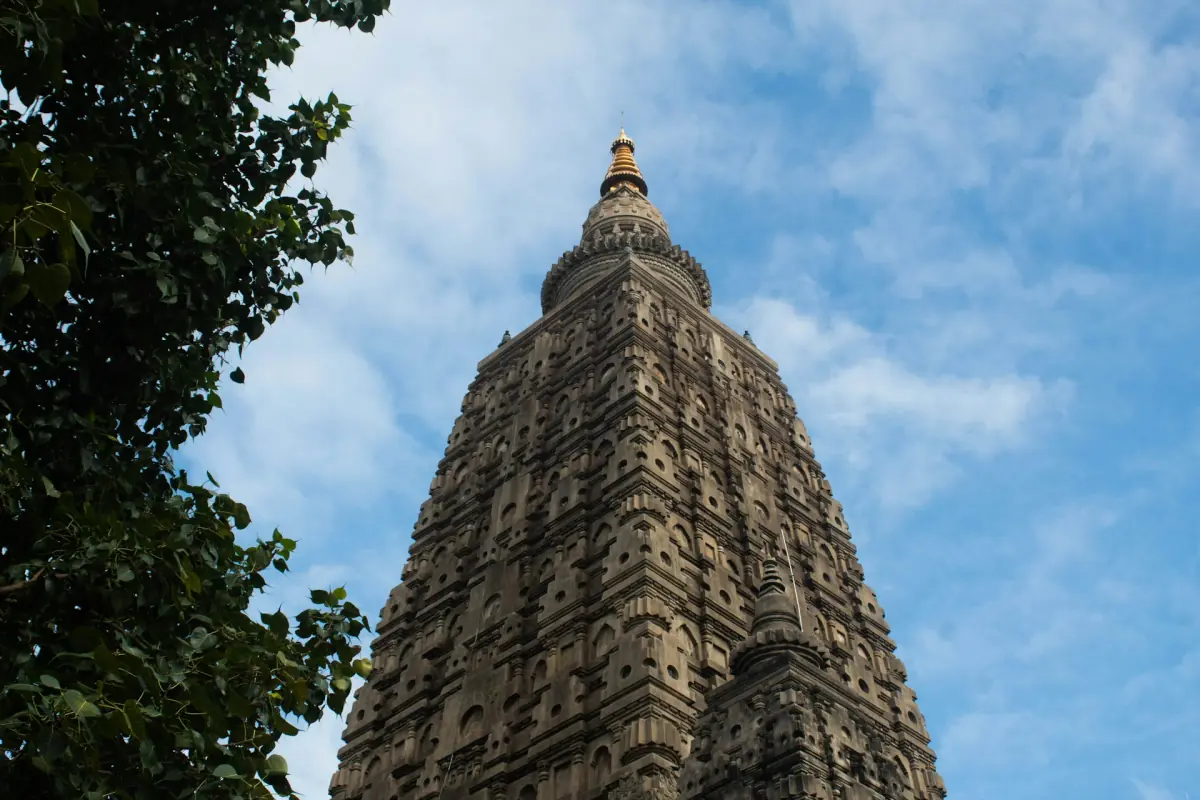
Mahabodhi Temple
The main shrine and the heart of the town. Entry is free. Hours are 05:00 to 21:00 or 06:00 to 18:00 every day, so confirm the time when you arrive. Phones, cameras and electronic devices are not allowed inside, and you take your shoes off and keep quiet.
Mahabodhi Temple →Bodhi tree and Vajrasana
The sacred fig tree grows beside the main temple, next to the Vajrasana, a polished sandstone platform linked to Ashoka. Buddhist tradition places the Buddha's enlightenment here.
Bodhi tree →Meditation Park
A separate area run by the temple management, for serious meditators only. It charges a fee and is open from sunrise to sunset. It is not covered by the free temple entry.
Monasteries and the Great Buddha
Thai, Japanese, Bhutanese, Tibetan and Vietnamese places of worship stand around the temple, together with the 80 feet Buddha statue. Hours differ from place to place.
Monasteries →Sujata Stupa and Dungeshwari Caves
Two quieter places outside the center. The stupa remembers Sujata and the rice and milk offering before the enlightenment. The caves are shrines linked to the ascetic years.
Sujata Stupa and the caves →Bodh Gaya museum
The Archaeological Museum Bodhgaya is run by the Archaeological Survey of India's Patna Circle. It shows Buddhist and Hindu finds from Bodh Gaya and its surroundings. A typical closing day is Friday, which is an everyday rule and not a promise for any single date.
Ticket prices and daily hours are best checked at the entrance, because they can change. Do not confuse this museum with the museum at Nalanda, which is a separate place. For planning, give the museum an hour or two, and pair it with a quiet afternoon after the temple.

Vipassana in Bodh Gaya and other meditation
Meditation centres here run courses with their own rules.
Dhamma Bodhi
A Vipassana centre near Bodh Gaya on the Gaya-Dobhi Road. You must apply for a course, and you take part only after your application is accepted and confirmed. Courses are taught in Hindi and English unless a course says otherwise.
You stay for the whole course, keep silence, and live in separate areas for men and women. Alcohol, other intoxicants and sexual activity are not allowed. The centre runs on donations. Do not count on a spontaneous drop-in place.
Root Institute
A Buddhist centre with a winter programme of open meditation and teaching events. Residential courses and retreats need registration in advance. It is open to people of different nationalities and religions, and it asks for quiet, respectful clothing and no intoxicants.
Meditating at the temple
The daily schedule of the Mahabodhi Temple includes 05:30 to 06:00 for sutta recitation and meditation, 18:00 to 18:30 for Mahayana recitation and 18:30 to 19:00 for Pali recitation.
These are practices of Buddhist tradition and not therapy, and no centre promises results. If you are new to meditation, a shorter session at the temple is a gentle way to start. The page on temple timings and rules has the full daily schedule.
Day trips from Bodh Gaya
Gaya is the nearest city and a major Hindu site for ancestor rites, see Gaya. Rajgir and Nalanda are the classic excursions for travelers with a full day. The wider pilgrimage route to Sarnath, Kushinagar and Lumbini is covered on the Buddhist circuit page.
Local rules to know
- Alcohol is banned in Bihar.
- Carry identity papers.
- Avoid remote places after dark.
- Treat monuments with respect and do not climb on them.
- Emergency numbers: police 100 or 112, ambulance 102 or 108.
For the season and the heat, see the weather page.


Things to do in Bodh Gaya: common questions
How many days do I need in Bodh Gaya?
One full day covers the temple, the Bodhi tree and a monastery or two. A second day lets you add the museum and the Sujata Stupa and Dungeshwari Caves. Meditation courses take longer and must be applied for in advance.
Is the Mahabodhi Temple free?
Yes, entry is ₹0 in 2026. The Meditation Park inside the management's area is separate and charges a fee. Phones, cameras and electronic devices are not allowed in the temple.
Can I join a Vipassana course without booking?
No. Dhamma Bodhi asks you to apply, and you can join only after your application is accepted and confirmed. Courses run in silence for the whole duration.
When is the Bodh Gaya museum closed?
Friday is the usual closing day. Check hours and ticket prices at the entrance, since they can change.
Is there one ticket for the temple, museum and meditation?
No. The temple is free, the museum and the Meditation Park have their own entry rules, and courses need their own application.
Is alcohol allowed in Bodh Gaya?
No. Alcohol is banned in Bihar. Carry identity papers and avoid remote places after dark.