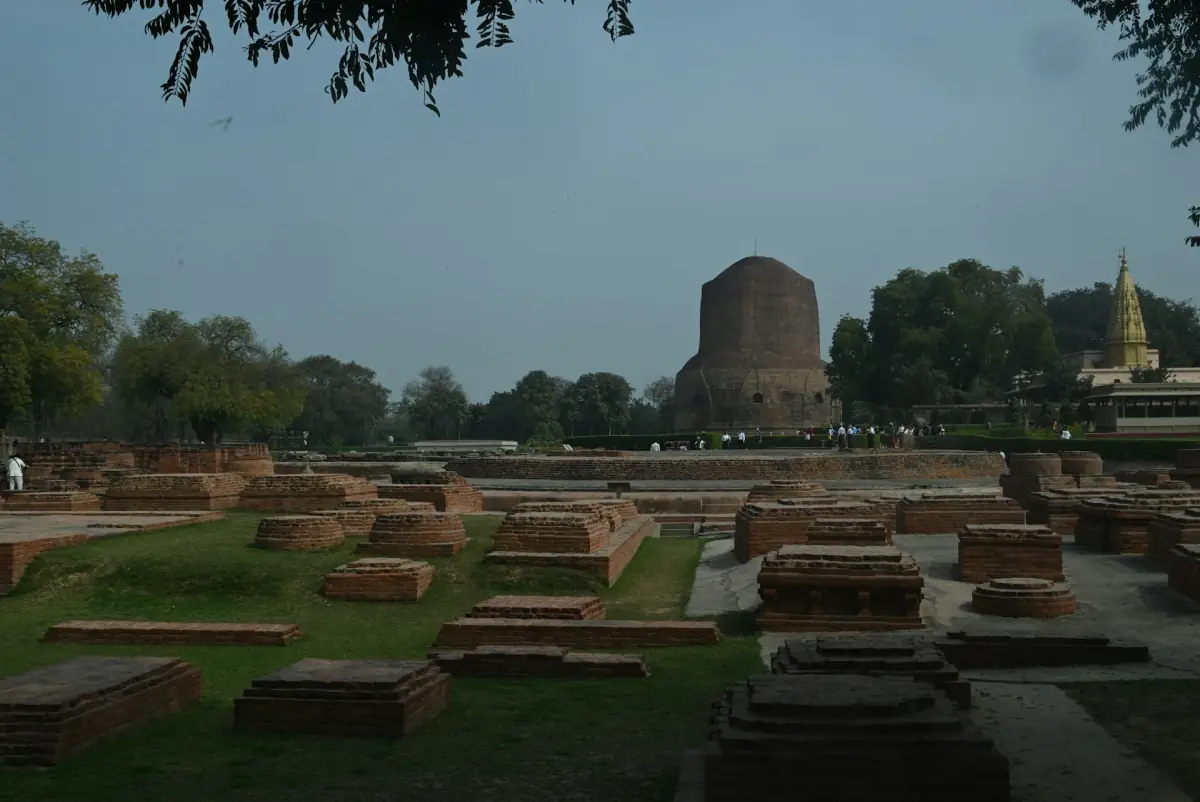
The history of Bodh Gaya in short
Buddhist tradition places the Buddha's enlightenment under the Bodhi tree at Bodh Gaya. Over the centuries a temple grew around the tree, was rebuilt and restored, and became a World Heritage site in 2002. The story has three layers: religious tradition, archaeology and modern administration. This page keeps them apart.
To see the place itself, the pages on the Mahabodhi Temple and the Bodhi tree are a good start. If you prefer to walk through it with a guide, the Bodh Gaya tours page lists guided days.

Our pick: a private day trip to the Mahabodhi Temple
A private day from Varanasi to the Mahabodhi Temple and the Great Buddha Statue, with a local guide.
Hand-picked tours, booked through GetYourGuide. Prices are indicative starting prices in US dollars (as of October 2026). Tap a tour for live availability and the current price in your currency.

Guided days at the Bodh Gaya sites
Tours around Bodh Gaya and the Buddhist region, with live prices and availability. Check the description for the sites each day includes.
Buddha enlightenment: what tradition says
In Buddhist tradition, the Buddha reached enlightenment at the age of 35, under the Bodhi tree in Bodh Gaya. The event is linked to the full moon of Vaisakha, the day now celebrated as Buddha Purnima. Tradition also describes seven weeks spent in the area after the enlightenment, at places such as the Animesh Lochan Chaitya, the Cankamana and the Muchalinda Sarovar.
No year for the enlightenment can be given with certainty. When this guide says "according to tradition", it means exactly that. The same care applies to the six or seven years of asceticism that came before, which the page on the Sujata Stupa and the Dungeshwari Caves mentions.
Where did the Buddha attain enlightenment?
At Bodh Gaya, in the district of Gaya in Bihar.
Bodh Gaya lies in Gaya district, and the Mahabodhi Temple Complex marks the place. The complex is the defined World Heritage area, which means the site, not the whole town. It includes the main temple, the Bodhi tree, the Vajrasana, votive stupas and the sites of the weeks after the enlightenment. The lotus pond lies south, outside the enclosure.
Bodh Gaya and Gaya are separate places. Gaya is an important Hindu site for ancestor rites, and the Gaya page explains the difference.
Ashoka and the early temple
From the 3rd century BCE to the late Gupta period.
| Period | What happened |
|---|---|
| 3rd century BCE | The first temple is built under Ashoka. The Vajrasana, a polished sandstone platform beside the tree, is also linked with Ashoka. |
| 5th to 6th century CE | The present brick temple dates to the late Gupta period. |
| 1874 to 1884 | A thorough renovation begins in 1874 with a delegation sent by King Mindon Min of Burma. It is completed in 1884 under Cunningham and Beglar. |
| 1891 | Anagarika Dharmapala begins his campaign over the management of the temple. |
| 1949 and 1953 | The Bodh Gaya Temple Act of 1949 sets the management. Management is formally handed over on 23 May 1953. |
| 2002 | The Mahabodhi Temple Complex is inscribed as World Heritage. |
Not every part of the building comes from Ashoka's time. The visible brick temple is far later than the first shrine. For visitors the main lesson is that the site grew in layers, so the stones you see belong to different centuries. For most readers, a short walk around the complex with this table in mind works well.
Restoration and the Maha Bodhi movement
The renovation began in 1874 with a delegation from King Mindon Min of Burma and ended in 1884 under Cunningham and Beglar.
In 1891 Anagarika Dharmapala became active in the campaign over how the temple should be managed. The question of who manages the temple goes back to that time. It is a historical conflict, and it does not tell you who owns the site today.

Temple management and the debate today
The Bodh Gaya Temple Act of 1949 is the legal basis for the temple management committee, known as the BTMC. Management was formally handed over on 23 May 1953.
Since 12 February 2025, the All India Buddhist Forum has protested and called for the temple to be managed only by Buddhists. District officials moved the protest site to Domuhan. The protests do not mean that the temple is closed, and they do not mean that the demand has been met.
A challenge to the Temple Act is before a court. This guide takes no side. For visitors, daily worship and visiting hours continue as described on the temple timings page.
Continue with the story
More places that belong to the history.


History of Bodh Gaya: common questions
Where did the Buddha attain enlightenment?
According to Buddhist tradition, under the Bodhi tree at Bodh Gaya in Gaya district, Bihar. The Mahabodhi Temple Complex marks the place.
In which year did the enlightenment happen?
No year can be given with certainty. Tradition says the Buddha was 35, and the day is remembered on the full moon of Vaisakha.
Did Ashoka build the Mahabodhi Temple?
The first temple was built under Ashoka in the 3rd century BCE. The present brick temple dates to the 5th to 6th century CE, so it should not be credited to Ashoka.
When was the temple restored?
A thorough renovation began in 1874 with a delegation from King Mindon Min of Burma and was completed in 1884 under Cunningham and Beglar.
Who manages the Mahabodhi Temple?
The temple management committee, under the Bodh Gaya Temple Act of 1949. A challenge to the Act is before a court, and protests call for a change. Visiting hours and worship continue as usual.
Is the Mahabodhi Temple managed only by Buddhists?
Management follows the Bodh Gaya Temple Act of 1949, and the formal handover took place on 23 May 1953. Since 12 February 2025 a Buddhist forum has protested and called for management only by Buddhists. The protests do not mean the temple is closed.