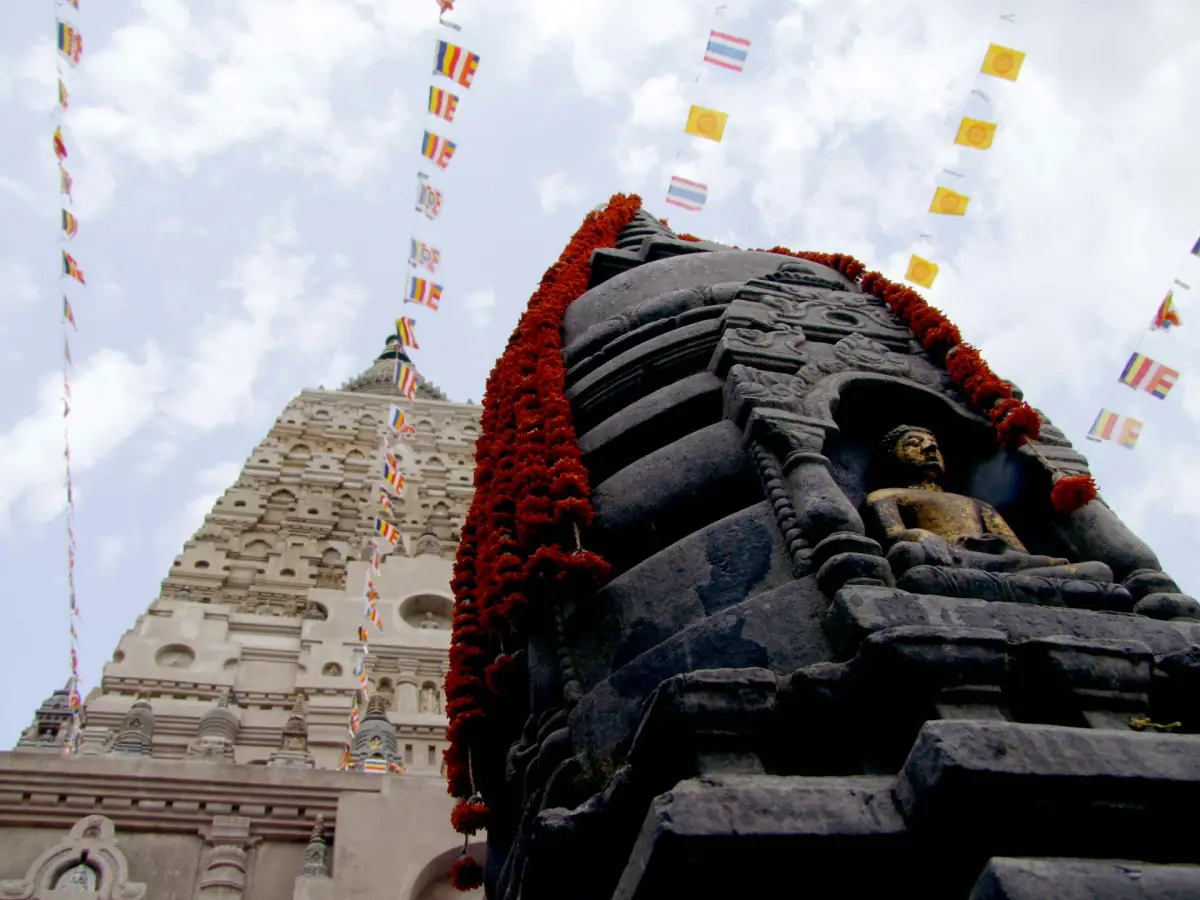
Gaya and Bodh Gaya are two different places
Gaya is the city in Bihar where most visitors arrive by train. Bodh Gaya, with the Mahabodhi Temple and the Bodhi tree, is a separate Buddhist pilgrimage town nearby. The two are easy to mix up because the names are so close, but they serve different traditions and have different rules for visitors.
Gaya is a place of Hindu ancestor rites on the banks of the Phalgu river. Its main shrine is the Vishnupad Temple. If you want to see the Buddhist sites, start with the Mahabodhi Temple, or look at the Bodh Gaya tours that start in this area and include Rajgir and Nalanda. Private day trips from Gaya and Bodh Gaya are compared on the Bodh Gaya private tour page.

Vishnupad Temple
A Hindu temple on the Phalgu, and what to expect as a visitor.
Who can go in
The Vishnupad Temple is a Hindu temple, and non-Hindus are not admitted to the temple interior. Do not expect a guide or a donation to change that, and do not ask for an exception. The riverside around it is a different matter from the closed inner temple, so ask locally before you plan a visit.
The building
The temple stands on the Phalgu river in Gaya and is dedicated to Vishnu. The present building dates to 1787 and is linked to Ahilyabai. It is a rebuilt temple, so do not describe it as an unchanged ancient structure.
Rules on site
Electronic devices are not allowed at the temple, so leave phones and cameras at your hotel. Many visitors here are families carrying out rites for relatives who have died, so keep a respectful distance.
Our pick: a Gaya ritual programme
A 3-day private tour that combines a ritual programme in Gaya with two nights in Bodh Gaya.
Hand-picked tours, booked through GetYourGuide. Prices are indicative starting prices in US dollars (as of October 2026). Tap a tour for live availability and the current price in your currency.

Tours from Gaya and Bodh Gaya
Day trips and guided pilgrimage tours around Gaya, Bodh Gaya, Rajgir and Nalanda, with live prices and availability.
Pind Daan and the Pitripaksha Mela
Gaya is known across India as the place for Pind Daan, an offering made for the peace of ancestors. It is a religious practice for families, not a tourist show, and it is carried out by pilgrims for their own dead. Treat it that way and keep a respectful distance.
The main season for these rites is the Pitripaksha Mela. In 2026 the Pitripaksha Mela ran from late September to early October. The period moves every year with the Hindu calendar, so check the new dates before you plan a trip for 2027.
Pind Daan and Buddhism are separate traditions. Gaya is the place for the Hindu rites, Bodh Gaya for the Buddhist pilgrimage, and the two should not be treated as one ritual.
Gaya Junction railway station
Gaya Junction is the railway station for Bodh Gaya. Most rail travellers get off here and continue by road. The state railway programme that runs a Buddhist circuit train also arrives in Gaya and takes passengers on to Bodh Gaya by bus. The road distance is 16 to 17 km, depending on where you measure from.
Check train numbers and timings for your own date before you book. The station is a transit point rather than a sight. For flights, taxis and the road from the airport, see how to get to Bodh Gaya.

Barabar caves near Gaya
The Barabar caves lie about 24 km north of Gaya. They are rock-cut sanctuaries from the 3rd century BCE and are linked to the Ajivika tradition. Lomas Rishi and Sudama are among the best known. Karan Chaupar and Sudama have no entry ticket. There is no fixed visiting time, so check conditions before you go and do not plan the caves as a stop in a tight schedule.
The Barabar caves are not the Dungeshwari caves. The Dungeshwari caves, linked to the ascetic years before Buddha's enlightenment, lie near Bodh Gaya. You can read about them on the Sujata Stupa and Dungeshwari caves page.
Gaya, Bodh Gaya and Barabar compared
Three places that visitors often combine in one stay.
| Place | Tradition | Main sight | Visitors |
|---|---|---|---|
| Gaya | Hindu | Vishnupad Temple, Phalgu river | Interior for Hindus only |
| Bodh Gaya | Buddhist | Mahabodhi Temple, Bodhi tree | Open to visitors, see the rules |
| Barabar caves | Ajivika (3rd century BCE) | Rock-cut caves, 24 km north of Gaya | Some caves without ticket |
For most visitors on a Buddhist trip, Gaya is a transit point and Bodh Gaya is the base. Add Gaya as a stop only if you have a family or religious reason, and add the Barabar caves if you have a spare half day. The history of Bodh Gaya explains how the two places fit together.
Gaya: frequently asked questions
Is Gaya the same as Bodh Gaya?
No. Gaya is a Hindu pilgrimage city on the Phalgu river with the Vishnupad Temple. Bodh Gaya is a separate Buddhist pilgrimage town with the Mahabodhi Temple. Gaya Junction is the station for both.
Can non-Hindus visit the Vishnupad Temple?
The temple interior is not open to non-Hindus. Do not rely on a guide or a donation to get in. If you only want a respectful look at the town, go for the surroundings and ask locally what is open to you.
What is Pind Daan?
Pind Daan is a Hindu rite of offerings for deceased ancestors. Families travel to Gaya to perform it, most of all during the Pitripaksha Mela. It is a religious practice, not an attraction.
How far is Gaya Junction from Bodh Gaya?
Around 16 to 17 km by road, depending on the starting point. The state circuit train brings guests to Gaya and then continues to Bodh Gaya by bus.
Are the Barabar caves the same as the Dungeshwari caves?
No. The Barabar caves are about 24 km north of Gaya and date to the 3rd century BCE. The Dungeshwari caves lie near Bodh Gaya and are linked to the ascetic years before Buddha's enlightenment.
Do I need to stay in Gaya?
Most visitors stay in Bodh Gaya, where the Buddhist sites are. See where to stay in Bodh Gaya for areas by location.